candle pavilion · chapelle de montban, farvagny · 2023-26













EN
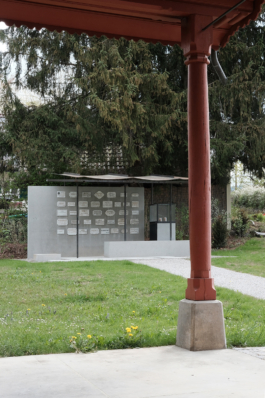
The Candle Pavilion project responds sensitively to the historical context of the parish and the immediate proximity of the Montban Chapel. It is conceived as a measured intervention aimed at preserving and revealing the site’s existing qualities. The project asserts a restrained presence, echoing the existing context through its materiality and form. The pavilion initiates a dialogue between old and new, between architecture and its surroundings.
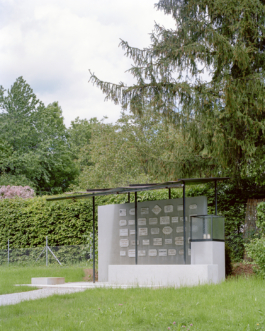
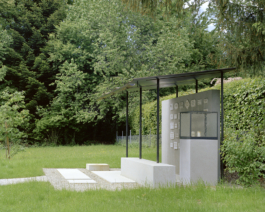
The Candle Pavilion is based on an intentional economy of means: few elements, each essential, executed with rigor and precision. It consists of a simple composition of linear, punctual, and planar elements: a wall, a bench, a glass case, and a roof.
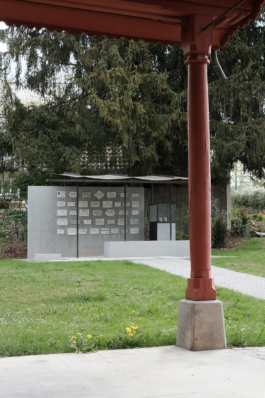
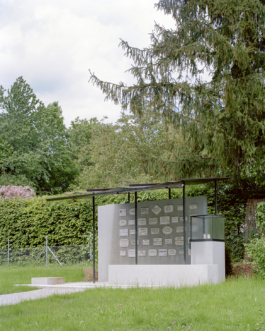
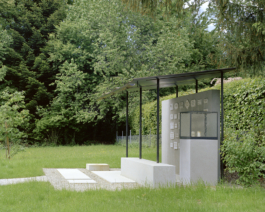
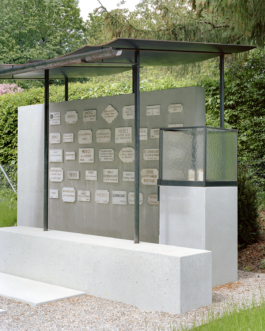
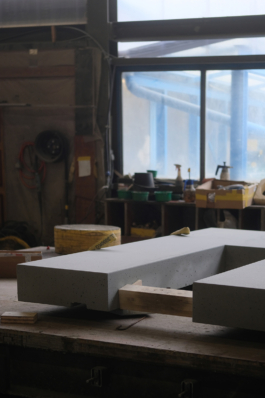
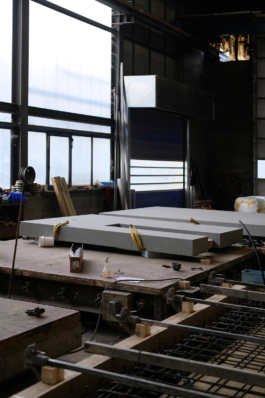
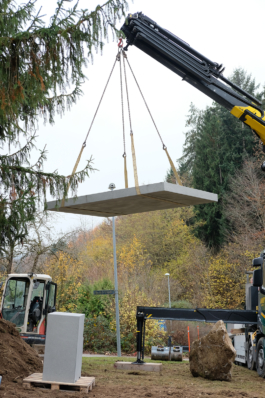
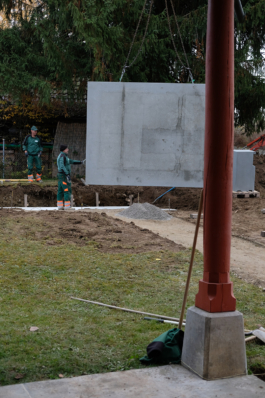
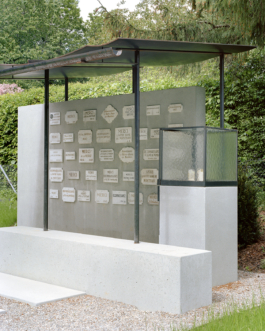
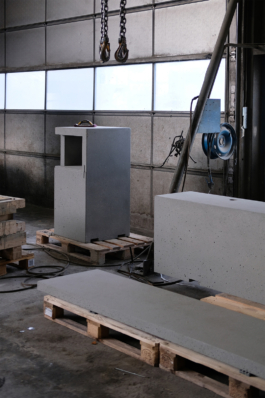
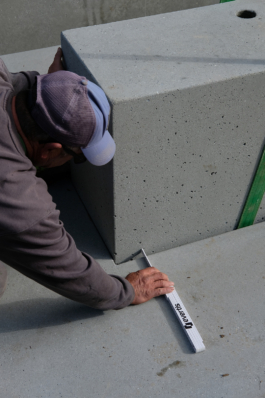
The pavilion takes the form of a landscape intervention, structured by mineral elements emerging from the ground and defining its presence. A concrete slab establishes a perimeter and delineates the different elements composing the whole. It contains and organizes the “objects” that participate in the project’s composition. A concrete wall rises to accommodate the ex-votos, forming a backdrop for the pavilion while offering a surface that is both protective and capable of capturing light. Nearby, a display case is precisely inserted into this mineral arrangement: a more delicate element that establishes a dialogue between transparency and mass, between metal and mineral. A monolithic bench completes the ensemble, inviting pause and contemplation.
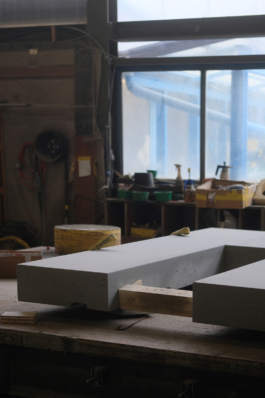
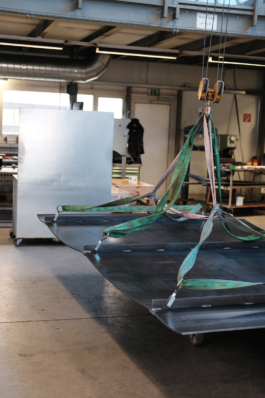
A thin steel roof partially covers the composition and unifies its elements. It rests at discrete points on the mineral components of the project. Supported by slender metal columns, it touches these elements with restraint, revealing by contrast their weight and inertia. Each element is specifically designed, and the architecture emerges from the precision of the joints and the clarity of the encounters between the different components.
Time becomes an active agent in the project: patina, traces of use, and variations in tone gradually anchor the structure within its environment. Architecture and nature interact through light and the changing seasons.
FR
Le projet du Candle Pavilion réagit avec sensibilité au contexte historique de la paroisse et à la proximité immédiate de la chapelle de Montban. Il s’inscrit dans une démarche d’intervention mesurée afin de préserver et révéler les qualités existantes du lieu.
Le projet affirme une présence réduite en faisant écho à l’existant par sa matérialité et sa forme. Le pavillon initie un dialogue entre l’ancien et le nouveau, entre l’architecture et son contexte.
Le Candle Pavilion repose sur une économie de moyens assumée : peu d’éléments, mais chacun essentiel, mis en œuvre avec rigueur et précision. Une composition simple d’éléments linéaires, ponctuels ou surfaciques : un mur, une assise, une vitrine et une toiture. Le pavillon prend la forme d’une intervention paysagère, structurée par des éléments minéraux qui émergent du sol et en définissent sa présence. La dalle en béton établit un périmètre et délimite les différents éléments qui composent l’ensemble. Elle contient et ordonne les « objets » qui participent à la composition du projet. Un mur en béton se dresse pour accueillir les ex-votos et forme un dos pour le pavillon, offrant une surface à la fois protectrice et capable de capter la lumière. À proximité, une vitrine s’insère avec précision dans ce dispositif minéral : élément plus délicat, elle instaure un dialogue entre transparence et masse, entre métal et minéral. Une assise monolithique complète l’ensemble, invitant à la pause et à la contemplation.
La toiture fine en acier couvre partiellement l’ensemble et contient les différents éléments. Elle repose ponctuellement sur les éléments minéraux qui composent le projet. Constituée de poteaux métalliques élancés, elle prend appui avec retenue sur ces pièces, révélant par contraste leur poids et leur inertie.
Chaque élément est dessiné spécifiquement et l’architecture naît de la précision des assemblages et de la lisibilité des rencontres entre les différents éléments. Le temps devient un acteur du projet : la patine, les traces d’usage et les variations de teinte inscrivent progressivement l’ouvrage dans son environnement. L’architecture et la nature y interagissent selon la lumière et les saisons.
images : Maxime Delvaux, Joel Tettamanti, Charly Jolliet
✕












candle pavilion · chapelle de montban, farvagny · 2023-26
EN
The Candle Pavilion project responds sensitively to the historical context of the parish and the immediate proximity of the Montban Chapel. It is conceived as a measured intervention aimed at preserving and revealing the site’s existing qualities. The project asserts a restrained presence, echoing the existing context through its materiality and form. The pavilion initiates a dialogue between old and new, between architecture and its surroundings.
The Candle Pavilion is based on an intentional economy of means: few elements, each essential, executed with rigor and precision. It consists of a simple composition of linear, punctual, and planar elements: a wall, a bench, a glass case, and a roof.
The pavilion takes the form of a landscape intervention, structured by mineral elements emerging from the ground and defining its presence. A concrete slab establishes a perimeter and delineates the different elements composing the whole. It contains and organizes the “objects” that participate in the project’s composition. A concrete wall rises to accommodate the ex-votos, forming a backdrop for the pavilion while offering a surface that is both protective and capable of capturing light. Nearby, a display case is precisely inserted into this mineral arrangement: a more delicate element that establishes a dialogue between transparency and mass, between metal and mineral. A monolithic bench completes the ensemble, inviting pause and contemplation.
A thin steel roof partially covers the composition and unifies its elements. It rests at discrete points on the mineral components of the project. Supported by slender metal columns, it touches these elements with restraint, revealing by contrast their weight and inertia. Each element is specifically designed, and the architecture emerges from the precision of the joints and the clarity of the encounters between the different components.
Time becomes an active agent in the project: patina, traces of use, and variations in tone gradually anchor the structure within its environment. Architecture and nature interact through light and the changing seasons.
FR
Le projet du Candle Pavilion réagit avec sensibilité au contexte historique de la paroisse et à la proximité immédiate de la chapelle de Montban. Il s’inscrit dans une démarche d’intervention mesurée afin de préserver et révéler les qualités existantes du lieu.
Le projet affirme une présence réduite en faisant écho à l’existant par sa matérialité et sa forme. Le pavillon initie un dialogue entre l’ancien et le nouveau, entre l’architecture et son contexte.
Le Candle Pavilion repose sur une économie de moyens assumée : peu d’éléments, mais chacun essentiel, mis en œuvre avec rigueur et précision. Une composition simple d’éléments linéaires, ponctuels ou surfaciques : un mur, une assise, une vitrine et une toiture. Le pavillon prend la forme d’une intervention paysagère, structurée par des éléments minéraux qui émergent du sol et en définissent sa présence. La dalle en béton établit un périmètre et délimite les différents éléments qui composent l’ensemble. Elle contient et ordonne les « objets » qui participent à la composition du projet. Un mur en béton se dresse pour accueillir les ex-votos et forme un dos pour le pavillon, offrant une surface à la fois protectrice et capable de capter la lumière. À proximité, une vitrine s’insère avec précision dans ce dispositif minéral : élément plus délicat, elle instaure un dialogue entre transparence et masse, entre métal et minéral. Une assise monolithique complète l’ensemble, invitant à la pause et à la contemplation.
La toiture fine en acier couvre partiellement l’ensemble et contient les différents éléments. Elle repose ponctuellement sur les éléments minéraux qui composent le projet. Constituée de poteaux métalliques élancés, elle prend appui avec retenue sur ces pièces, révélant par contraste leur poids et leur inertie.
Chaque élément est dessiné spécifiquement et l’architecture naît de la précision des assemblages et de la lisibilité des rencontres entre les différents éléments. Le temps devient un acteur du projet : la patine, les traces d’usage et les variations de teinte inscrivent progressivement l’ouvrage dans son environnement. L’architecture et la nature y interagissent selon la lumière et les saisons.
images : Maxime Delvaux, Joel Tettamanti, Charly Jolliet